Yamamoto
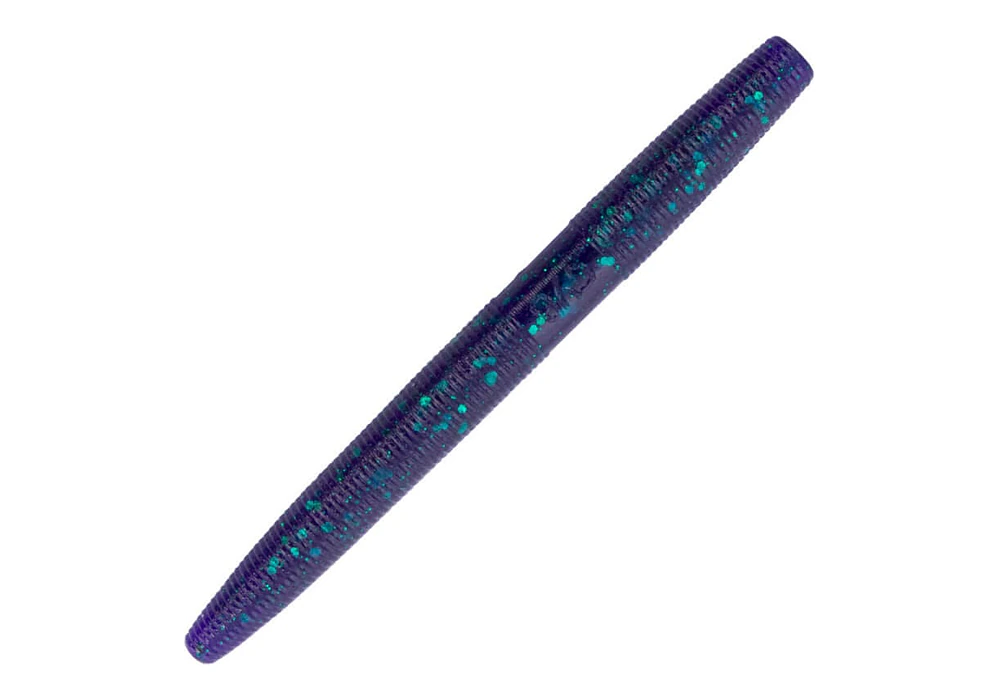
Master the Yamamoto 5-inch Senko
Learn to read its fall, choose a rig and let a simple stick worm do the work.
- Updated
- Reviewed September 2026
Quick facts
Best for
Pressured fish
Rigs and retrieves
Weightless Texas
Key idea
A Senko does not need constant movement. It needs a free fall, a readable line and time in the productive zone.
How it works
Its straight, dense and usually salted body falls with a subtle shimmy. Hook weight, line diameter and rigging alter that fall, so watch it beside the bank before deciding how much action to add.
When it makes sense
Use it when fish will not chase, around isolated wood, sparse grass, docks or small depth changes. It excels at holding in a target, but it is not an efficient tool for finding widely scattered fish.
How to present it
Cast beyond the target, allow the lure to fall with minimal tension and watch the line. A jump, acceleration or sideways drift may be the only bite signal.
If wind prevents you following the fall, add the least weight that restores control. If it reaches bottom before passing the target, check the casting angle first. When fish follow without striking, try a longer pause before changing colour: this tests whether it needed more time in the productive zone.
- Start weightless when control allows it.
- Add weight only to reach the layer or manage wind.
- Check that the plastic still falls straight after a bite.
Common mistakes
Most mistakes come from rushing a lure designed to stay in the spot.
- Overworking it.
- Keeping the line so tight that the lure swings toward you.
- Ignoring the line on the fall.
- Using more tackle than the cover requires.