SPRO
Master the SPRO Bronzeye Frog 65
Cross vegetation, work openings and turn a visual strike into a controlled hookset.
- Updated
- Reviewed September 2026
Quick facts
Best for
Surface vegetation
Rigs and retrieves
Walking retrieve
Key idea
A frog creates access, not immunity: angle, line and hook-setting room still decide the presentation.
How it works
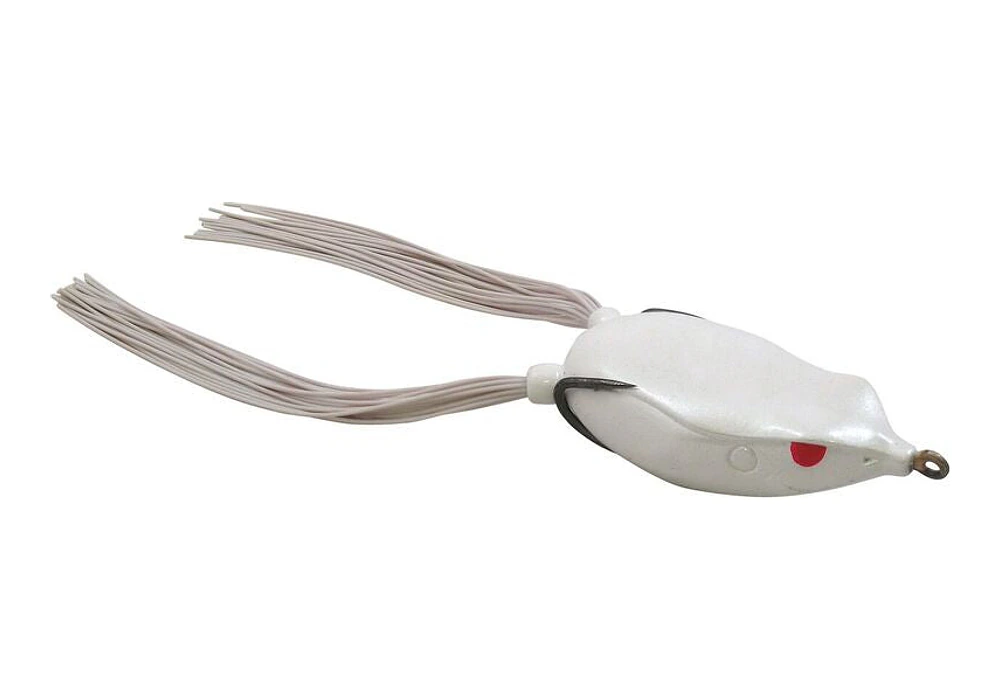
The hollow body shields twin hook points and compresses on a strike. It crosses mats as a surface silhouette and can walk side to side in open pockets. Trimming the legs changes balance, so work gradually.
When it makes sense
It reaches floating grass, pads, limbs and shade where exposed hooks struggle. In clean open water another topwater may hook fish more easily; the frog earns its place when it solves access.
How to present it
Fish the near edge before the far mat and pause in each opening. On a blow-up, gather slack, feel weight and then set; the right delay changes with distance and vegetation.
After blow-ups without contact, check slack, body condition and hook-setting space before modifying hooks. No fixed count of seconds suits every strike: seek actual contact. Without vegetation that calls for protected points, compare an open-water topwater presentation.
- Check that the body drains and regains shape.
- Match cadence to the size of each opening.
- Inspect line and knot after hard cover.
Common mistakes
The visual strike often makes anglers react before contact is real.
- Setting only on the splash.
- Using stretchy line in dense cover.
- Crossing openings without pausing.
- Trimming the legs too much at once.