Berkley
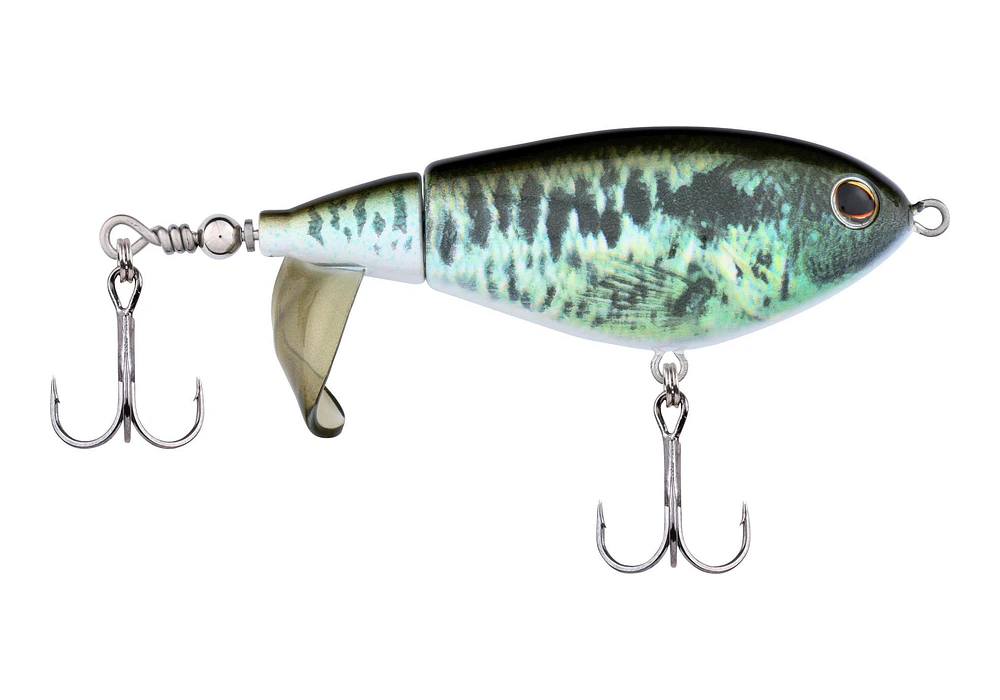
Berkley Choppo
Control rhythm, wake and pauses without turning every cast into a race.
- Updated
- Reviewed September 2026
Quick facts
Best for
Dawn and dusk
Rigs and retrieves
Steady retrieve
Key idea
Choose how long it stays over each area and the speed that keeps its wake clean.
How it works
The rotating tail moves water and produces a rhythmic surface signal. Watch whether it spins cleanly, carries debris or is disturbed by waves. Speed changes both wake size and the time a fish has to intercept.
When to use it
Search banks, points, gaps and open water when fish are active near the surface. Light chop can blend the signal; try a quieter pace in flat calm. A popper offers more control when you need to remain beside one branch.
How to present it
Find a speed that starts the tail reliably. Hold the rod so the nose is not pulled under and add short accelerations at key spots. Feel weight before setting, inspect the tail if the sound changes and fish the near strip first. Clean off algae before the next cast.
Common mistakes
Avoid routinely retrieving too fast, setting only on the splash, ignoring tail debris and missing interception points. After missed strikes, change one variable: speed, direction or available size. With no surface activity, explore another depth instead of repeating the same pass indefinitely.