Berkley
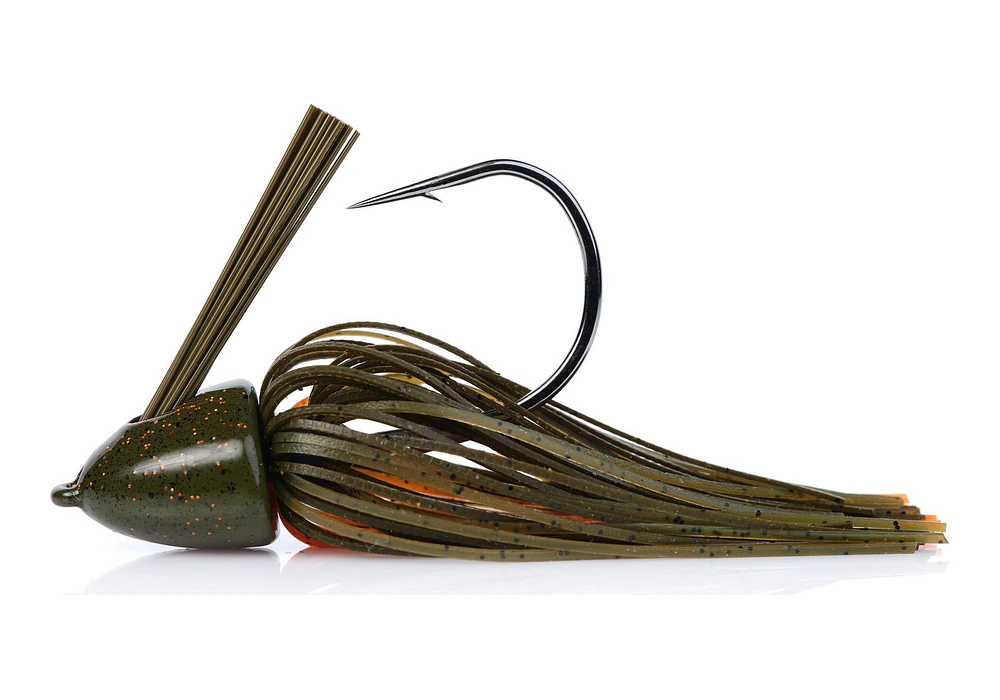
Berkley Heavy Cover Jig
Enter wood and dense vegetation while keeping control of the fall and hookset.
- Updated
- Reviewed September 2026
Quick facts
Best for
Dense vegetation
Rigs and retrieves
Pitching
Key idea
Weight provides control when cover prevents a lighter presentation reaching the target cleanly.
How it works
The weighted head opens a path and concentrates the rig around the hook. The skirt and trailer slow the fall, add volume and change posture on the bottom. Their balance determines whether the jig penetrates cover or rests on top.
When to use it
Use it in grass openings, flooded trees, shade and targets a light rig cannot reach clearly. It repeats vertical presentations in small spaces. On clean bottom or around wary fish, a finesse jig may offer a more restrained approach.
How to present it
Make a short controlled cast, follow the fall without stopping it and watch the line. On bottom, alternate rest and small lifts, then retrieve along a clear exit. Match weight to cover density and check the hook after hard contact. More trailer resistance or a lighter head can slow an overly fast fall.
Common mistakes
More weight cannot fix a bad path. Avoid crossing too many branches, losing contact, oversized trailers and too much slack before setting. The weedguard reduces snagging but does not replace a workable entry and exit angle. Include trailer weight when choosing tackle.