Zoom
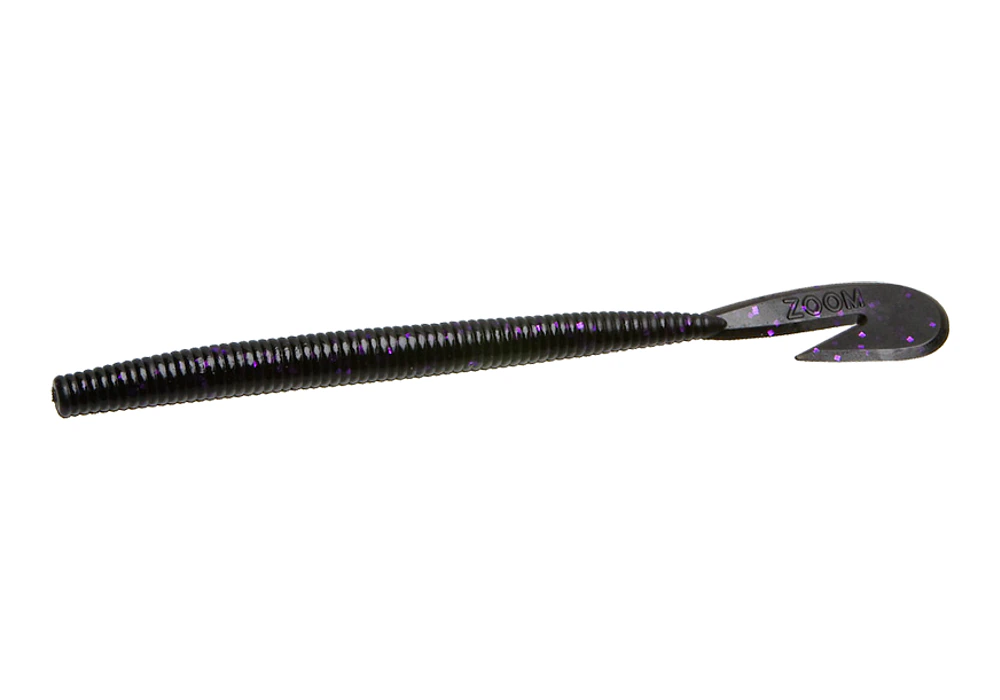
Zoom Ultra Vibe Speed Worm
Combine swimming, falling and vegetation contact with a worm that also searches for fish.
- Updated
- Reviewed September 2026
Quick facts
Best for
Grass edges
Rigs and retrieves
Light Texas
Key idea
The tail covers water, while a controlled fall lets the same lure switch to precision.
How it works
The large tail works on the retrieve and the fall. The worm profile can swim above grass, then descend into an opening. Weight, speed and rod height set depth; excessive speed can make the rig spin.
When to use it
Useful along grass, reeds and stained bays where you alternate search and precision. It covers more water than a passive-tail worm. In cold or very clear water, reduce speed or try a subtler profile if the constant tail signal is excessive.
How to present it
Swim just above cover, lower the tip at an opening and let it fall. Resume gently until the tail works again. Use the minimum weight that holds depth, keep the body straight and clear grass after each cast. Adjust weight when switching between swimming above grass and penetrating gaps.
Common mistakes
Avoid excessive speed, overloading the rig, passing openings without a drop and burying the hook point so deeply that it prevents setting. A uniform retrieve wastes the ability to alternate travel and falling action. Check alignment whenever rod resistance changes.