Z-Man
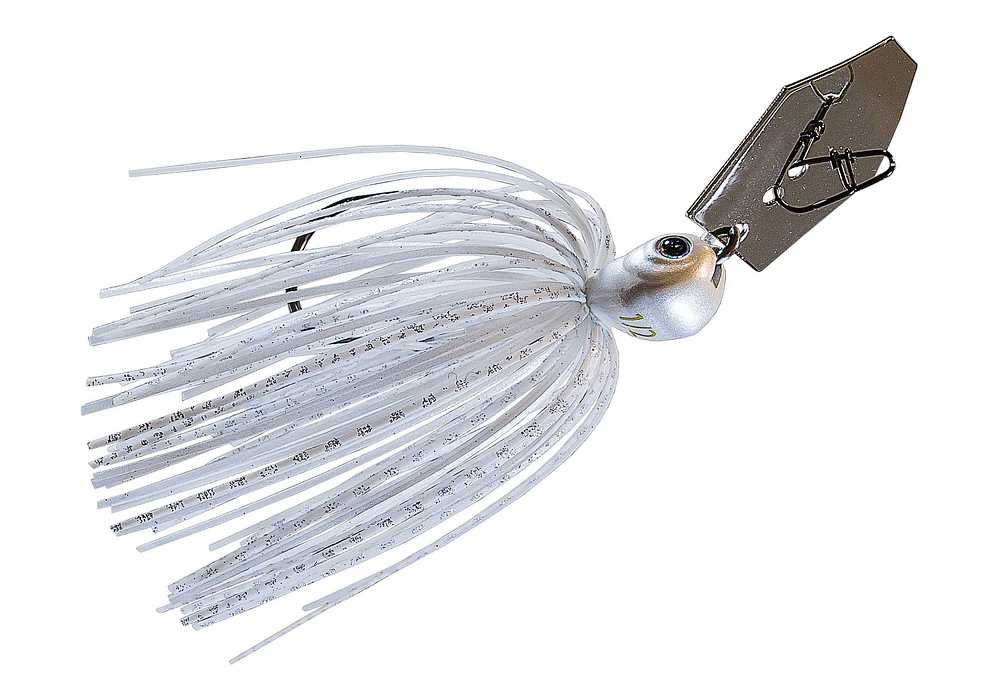
Understand the Z-Man ChatterBait JackHammer
What the blade adds, how the trailer changes it and where continuous vibration helps.
- Updated
- Reviewed September 2026
Quick facts
Best for
Submerged vegetation
Rigs and retrieves
Steady retrieve
Key idea
Vibration is information: when it stops, changes or feels heavy, you may have grass, contact or a bite.
How it works
The blade articulates in front of the head and produces a strong pulse. The skirt adds volume, while trailer shape changes lift, resistance and silhouette. That steady connection also helps you read changes in cover.
When it makes sense
It is a useful search tool across flats, grass edges, open wood and lower visibility. In clear, calm water or around fish rejecting strong signals, reduce size and speed or choose a subtler presentation.
How to present it
Begin with a steady pulse and change one variable at a time. Speed lifts it; a lower rod and slower retrieve hold it deeper. A short release after touching grass can clear the blade and change direction.
If it rises above the target layer, reduce speed or trailer resistance and consider a different head weight. If vibration stops, check for grass and rigging problems before treating every change as a bite. A clean edge allows continuous searching; tight branches may require a different angle or a precision presentation.
- Count it down to repeat depth.
- Stay connected without locking the rod.
- Make sure the blade starts cleanly after each cast.
Common mistakes
A single retrieve cannot solve every bottom and cover change.
- Using a trailer that lifts the lure out of the target layer.
- Setting before the rod loads.
- Ignoring changes in vibration.
- Forcing it through tight wood at a poor angle.